
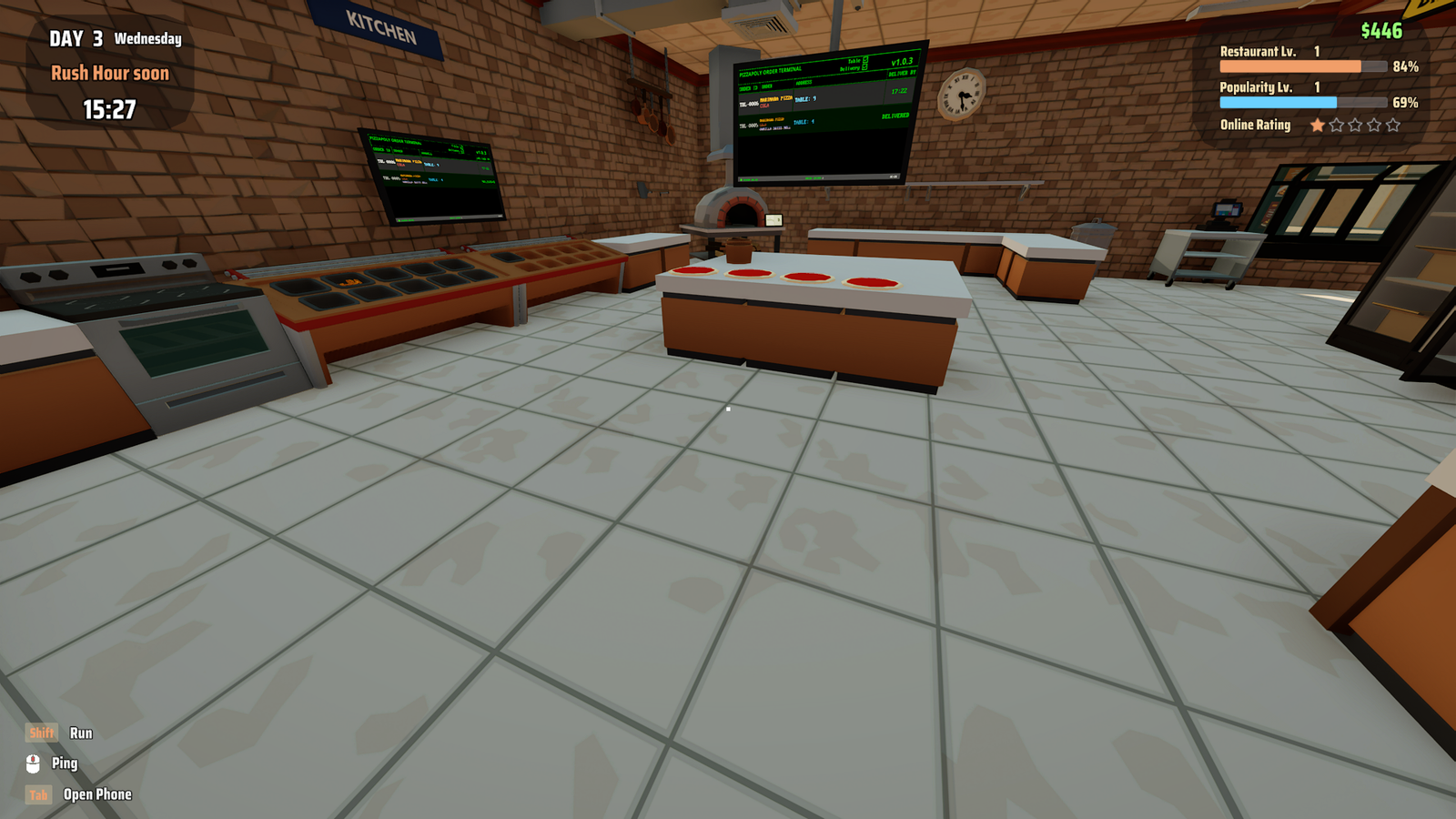
Ever wanted to run a pizza shop? No? Well, tough luck. There’s sauce to make, pizzas to prepare and a customer at the till who is already wondering what’s taking so long.
That is the mood Pizzapoly captures so well. Running a pizzeria sounds manageable when you break it down into individual jobs. Make the food, serve the customers, clean up and do it all again. Put those responsibilities together, however, and a straightforward working day becomes a frantic exercise in deciding which problem needs your attention first.
Developed and published by Polytan Games, Pizzapoly offers restaurant management with a practical, hands-on approach. Its Steam demo introduces the cooking, service and delivery systems that underpin the wider game.
Based on my time with it, there is already plenty here to enjoy. There is also plenty to make you realise that opening a pizza shop might be considerably less relaxing than eating in one.
More than putting toppings on dough
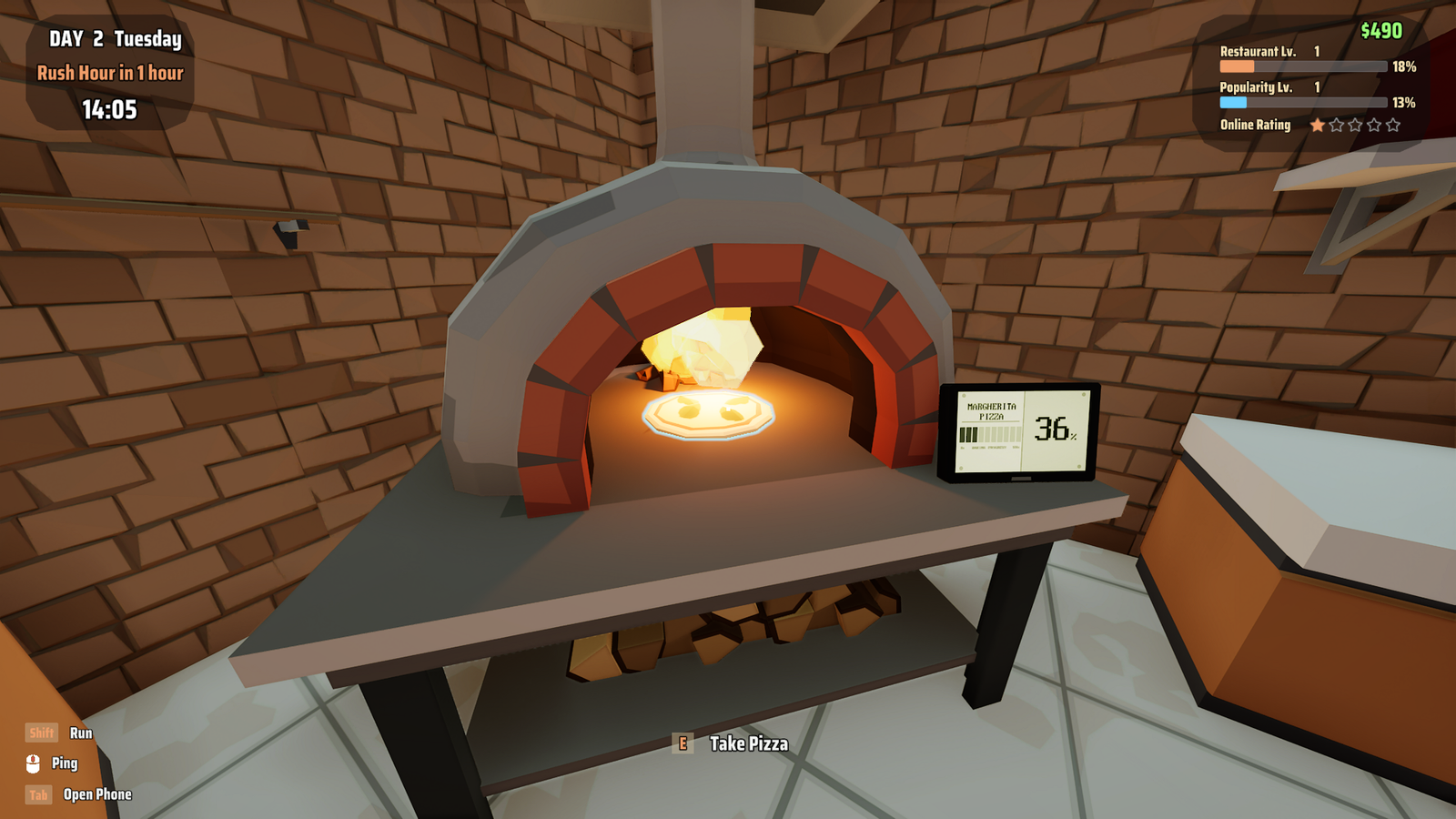
One of the things I enjoyed most was how involved preparing the food feels. You have to make the sauces as well as the pizzas, and those smaller preparation jobs give the kitchen its own rhythm.
The sauce-making minigames are a particularly nice touch. They give an everyday task a little personality and make preparation feel like an active part of running the shop. You are involved in what goes into the food, which helps make the finished order feel like something you have actually worked towards.
Of course, taking an interest in your sauce becomes slightly harder when someone else is waiting to be served.
That tension is central to the experience. Each task makes sense on its own, but none exists in isolation. Spending time preparing one part of an order means leaving something else unattended, and the game keeps finding ways to remind you of that.
Making a pizza is satisfying. Making a pizza while mentally counting all the other jobs you should be doing is where Pizzapoly starts to become memorable.
Your customers have somewhere else to be
The customers are not prepared to wait forever while you find your feet.
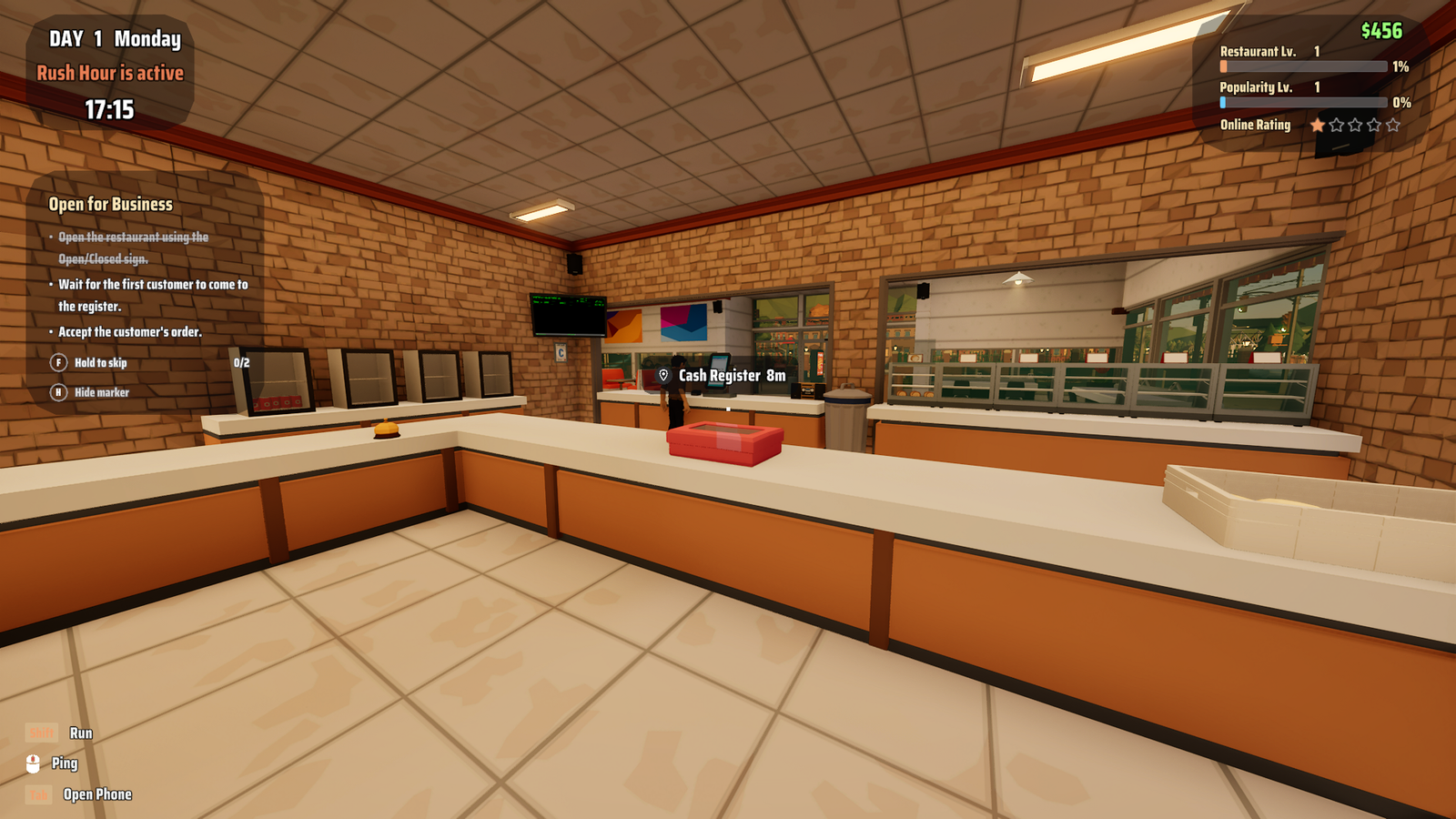
Leave someone standing at the till too long and they will go. Take too long getting their food ready and you can lose them as well. It creates a constant pressure to keep things moving, even when the kitchen is already demanding your attention.
This gives the restaurant a sense of urgency. You cannot comfortably disappear into food preparation and assume the front of the shop will look after itself. Serving people is another responsibility competing for the same limited time.
Then there are the tables.
Cleaning up might sound like a minor detail, but dirty tables stop you making room for more customers. A job that would be easy to overlook becomes part of keeping the business moving. Finishing an order does not mean that your work with that customer is entirely over.
I liked how these responsibilities connect. Cooking, serving and cleaning all affect the same restaurant, so neglecting one part soon creates difficulties elsewhere.
It also makes the pressure easy to understand. You can see what needs doing. The challenge is finding enough time to do it.
Forgetting your ingredients comes at a cost
Pizzapoly also asks you to think beyond the next order.
Leave your ingredients out overnight and you lose money. It is a small detail with a meaningful consequence, particularly when you have already spent the day trying to keep up with customers.
That makes the end of the working day another part of the management challenge. Getting through service is only one responsibility. Looking after your stock matters too, and being careless can undo some of the effort you have put into earning money.
For me, details like this help sell the idea of running a business. The ingredients are resources you need to manage, and wasting them gives you another reason to pay attention.
There is something fitting about surviving a busy shift, only to realise that your own forgetfulness has created an unnecessary expense.
The game certainly knows how to keep you on your toes.
Deliveries turn up the heat
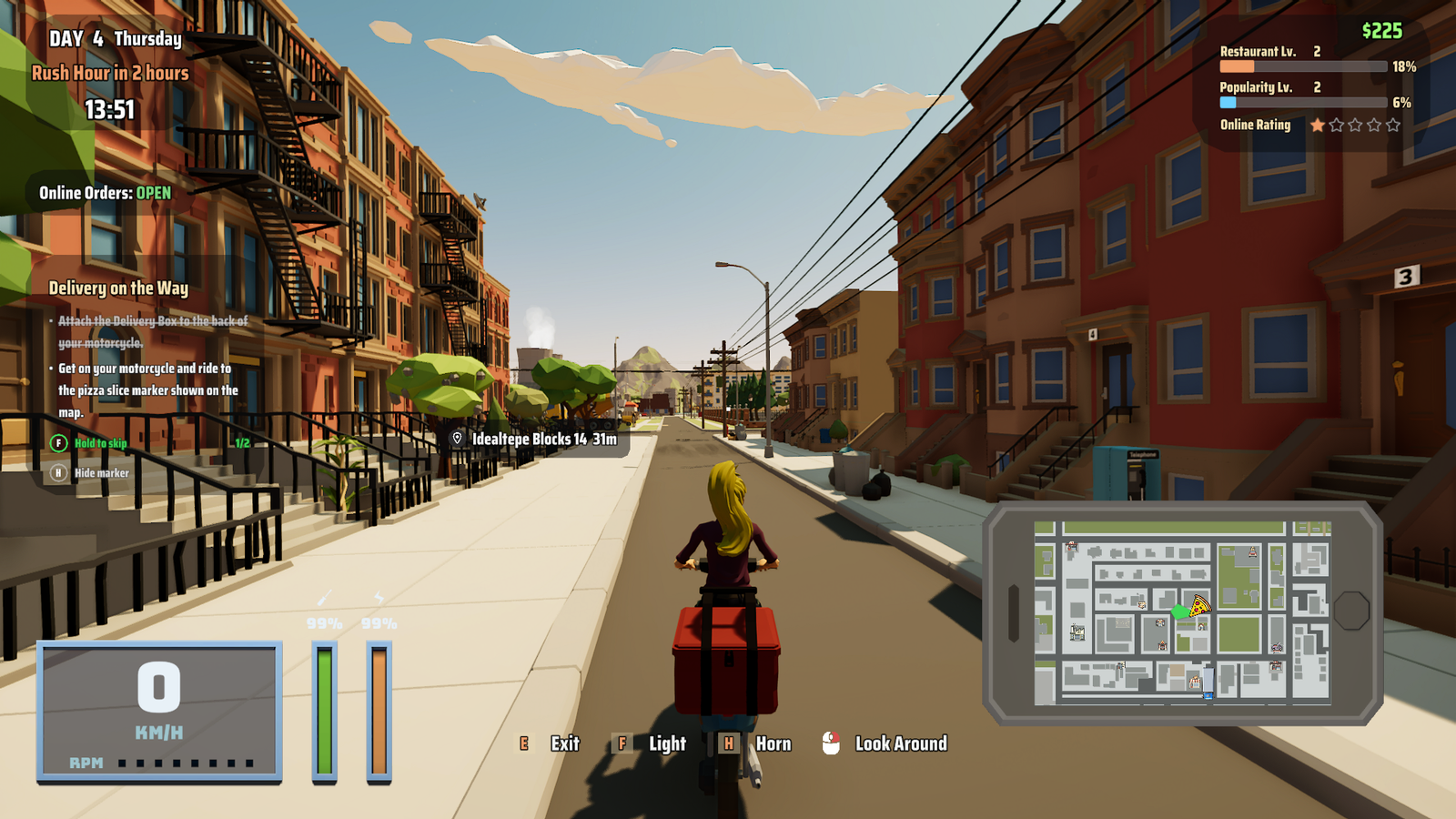
As you level up and unlock more things, the workload starts to grow. Deliveries were where that increase in responsibility really stood out to me.
Having orders to deal with beyond the restaurant adds another demand to an already busy routine. Keeping the shop running becomes more complicated when getting food to customers also involves heading out on a delivery.
What I particularly liked was the inclusion of fuel and repair costs for the delivery bikes. Deliveries bring extra expenses as well as extra work, giving the system more substance than simply taking a pizza from one place to another.
It is a good idea because it connects the delivery side of the game to the money you are trying to manage. The bike is another part of the business that needs looking after.
Unlocking more features therefore comes with a trade-off. It is exciting to gain access to something new, but that new opportunity also gives you more to remember.
That was when the demo began to feel properly stressful for me. The restaurant was asking for more attention, the list of responsibilities was growing, and keeping everything under control became increasingly demanding.
Enjoyable chaos, with a demanding pace
The pace is a big part of why I enjoyed Pizzapoly, but it is also the clearest indication of who will get the most from it.
If you like juggling tasks, responding to impatient customers and trying to organise a growing workload, there is plenty to get involved in. The satisfaction comes from managing several responsibilities well enough to keep the restaurant functioning.
If your ideal cooking game involves taking your time over each dish, the urgency here may be less appealing. Customers leaving, ingredients going to waste and delivery expenses all push you towards paying attention to the wider business.
For me, that pressure mostly worked in the game’s favour. It gave the smaller tasks a purpose and made progression feel consequential. New features changed what I needed to think about, rather than simply adding more things to own.
The challenge for the wider release will be sustaining that enjoyment as the workload expands. The demo already shows how quickly additional responsibilities can become stressful. Keeping that pressure satisfying over a longer stretch will be important.
Verdict: a promising pizza shop worth watching
I came away from Pizzapoly’s demo having enjoyed myself and wanting to see more.
The sauce-making minigames give food preparation some character, while impatient customers and table cleaning keep service moving. Ingredient waste adds consequences to poor organisation, and fuel and repair costs give deliveries another layer of management.
Together, these systems make running the shop feel busy and involved. There is always something else to do, and levelling up only gives you more reasons to keep moving.
This remains a review of the demo, so it is too early to judge the complete game’s lasting appeal. However, the foundations are promising, and the experience has given me a good reason to follow its development.
Pizzapoly is currently scheduled to enter Early Access in March 2027. After this taste of restaurant life, I am looking forward to getting back into the kitchen.
Whether the customers will be quite as pleased to see me is another matter.
Play the demo or wishlist the game: https://store.steampowered.com/app/5363200/Pizzapoly_Demo/
Comments